women

Woodspriestess: Women’s Circles

“I see a chain of women, each listening to each, being present to her as she waits
for her Self to be born, for her feeling values to come to form and to birth…
Woman after woman, being present, as each finds her voice”
Judith Duerk: Journey to Herself

“The calling a woman feels to gather in Sacred Space with other Sisters starts first as a low and slow warmth that begins to burn. If left unfed, it rises quickly to a raging fire of desire. It will not be denied and can only be quenched by the nourishment of Truth, Candlelight,
Song And Sisterhood”
Ayla Mellani ~ Founder of Chrysalis Woman

“You will be teachers for each other. You will come together in circles and speak your truth to each other. The time has come for women to accept their spiritual responsibility for the planet”
Sherry Anderson & Patricia Hopkins ~ The Feminine Face of God

quotes via Chrysalis Woman

In February 2010, I bought the Rise Up and Call Her Name curriculum from the UU Women and Religion store. I listened to the CD that came with the curriculum over and over during one of my darkest personal experiences, the experience of my second miscarriage, and it spoke to me deeply at a time when I needed it and when I was not able to be “heard” in any other manner. It was at this time that the shift in my life’s focus became apparent to me, from birthwork to women’s life cycle work, and priestess work. I dreamed of facilitating the series of classes, but it took me until this year to actually make that dream a reality. We’ve been having quarterly women’s retreats locally since the end of 2010 and I’ve facilitated the Cakes for the Queen of Heaven series a couple of times as well as Meetings at the Moon for mother-daughter pairs, but Rise Up kept waiting in my closet. This year, I decided to offer it as a year-long once-a-month class, rather than as a 13 week series. I thought this made sense in terms of people’s busy schedules and ability to commit. As it turns out, committing to something once a month for a year may also be asking too much of many women and only a small handful of women made the commitment. We now have just a little circle of six, but we’re doing it and it actually feels like the perfect group after all (I’m easily seduced into bigger-is-better ways of thinking about groupwork, even though smaller groups can be much more rewarding experiences!). This afternoon was our March class and it really felt like it “healed” me from my disconnect, separation, can’t listen/reach out the way I wish to, feelings from my “making a place for others” post on Wednesday. My post from Wednesday was very much an artifact of not having any time alone to regroup from several stressful, too-busy days in a row. This afternoon before the Rise Up class, my parents had my kids over and I spent some time first down in the woods visiting the rocks further down the hill, including these that form a lovely circle…
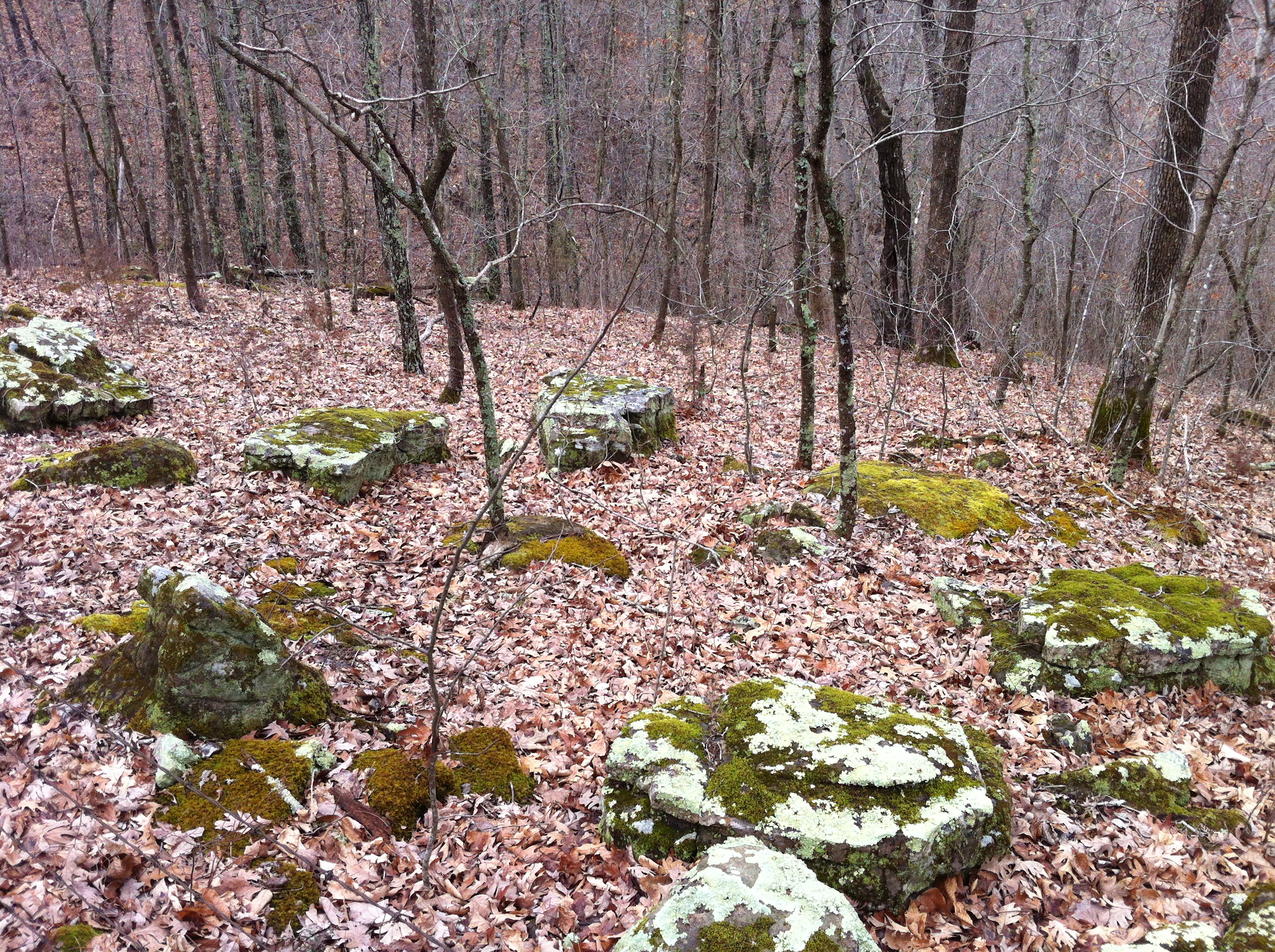
March 2013 069

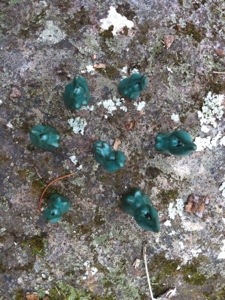
On my way back to the house, just look at what popped out at me from the ground…
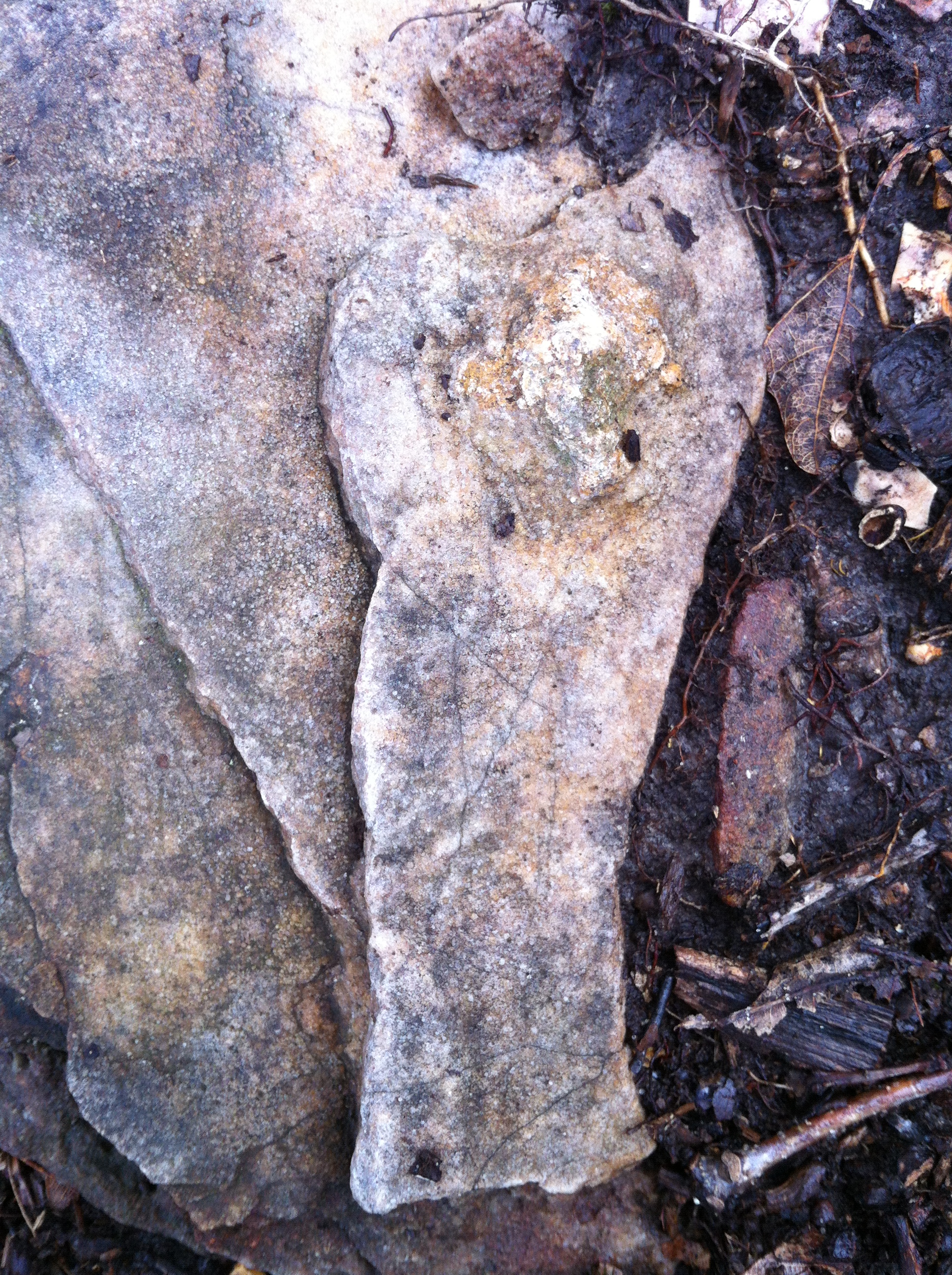
March 2013 071

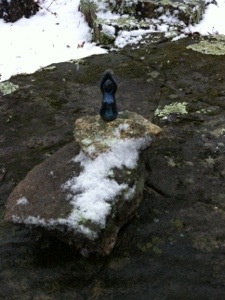
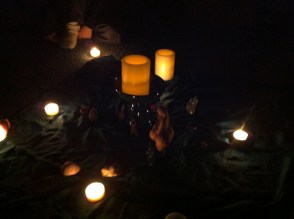
This is one of the “stepping stones” on the way to the priestess rocks. I can’t believe I’ve never noticed her before! When I came in, I put on the Rise Up CD and worked setting up a springtime altar. When I lay out an altar, I often kind of force myself to include the “right” objects representing the four directions. This time, I decided to just put on the altar what wanted to be there and what communicated something about the purpose of the day. I loved the result! It was one of my favorite circle altars so far.

March 2013 086

Altar with addition of springtime daffodil from my mom, rearrangement of many things by toddler daughter, and eating of fig cookies as part of the “ingathering” ritual…

March 2013 077

Circle round
circle round and celebrate
circle round and sing
circle round and share stories
circle round and reach out a hand

circle

no beginning
no end

In my college classes, I often tell my students that in working with people, we need to learn to think in circles, rather than in lines. Circles are strong. Circles are steady. Circles hold the space, circles make a place for others. Circles can expand or contract as needed. Circles can be permeable and yet have a strong boundary. Linked arms in a circle can keep things out and show solidarity. Linked energy in a circle can transform the ordinary into sacred space. Hands at each other’s backs, facing each other, eye level.

In the woods, I offered this prayer for our circle:

May our circle be strong
may our circle be harmonious
may our circle be steady
and may our circle grow and change

please guide me as I priestess this circle today
please help me to see, hear, and honor those within the circle
help me to act with love in my heart, hands, and mind
help me to guard the energy of this space
help me to facilitate sacred connection

let us all act as sisters
as companions and friends
hold hands
hold the space
hold each other…

I also chose the following reading to use following the “ingathering” ritual at the opening of the Rise Up class. We did it as a responsive reading (i.e. I read each line and then the group repeated it). It felt perfect!

I am a woman,
a human being of extraordinary strength, wisdom, and grace.
My woman’s body was created in the body of a woman.
I am daughter, sister, mother
in thousands of generations of women…
I am a woman,
part of and the whole of the first circle,
the circle that transcended space and time,
the circle of women joined.
–Ann Valliant and Kathleen Klimek (in Open Mind by Diane Mariechild)

I had such a positive, happy feeling after the close of our class. I did not feel drained or as if I’d been doing too much or giving away too much of my energy. I felt nourished, healed, connected, and satisfied. In February, when I took my annual computer-off retreat, I had the realization that a lot of the scattered and distracted feelings I experience are more often related to children and parenting than to technology (I’d been blaming technology, but with the technology off, I realized it was actually the kids!). And, today I had a similar realization—that perhaps I often feel drained by people contact as well as scattered, distracted, and unable to fully connect, because I’m usually trying to do that and mother at the same time. While mothering is fulfilling too and my kids are certainly extremely important to me, oh my goodness it was just a delight to spend time with these friends today just us, with no kids asking us for anything. It was much easier to see and be seen, to hear and be heard, when there were no other needs to fulfill but our own!

Right as everyone was leaving, I remembered I’d wanted to offer aura photographs via a little app I’d gotten for my phone quite a few months ago… March 2013 091 I would not really place a lot of stock into its authenticness, but it was really fun and actually surprisingly on target!

After everyone left, I headed back down to the woods with my husband and daughter. We went on a spontaneous ramble through the woods and made many cool discoveries that I will have to write about in a later post…
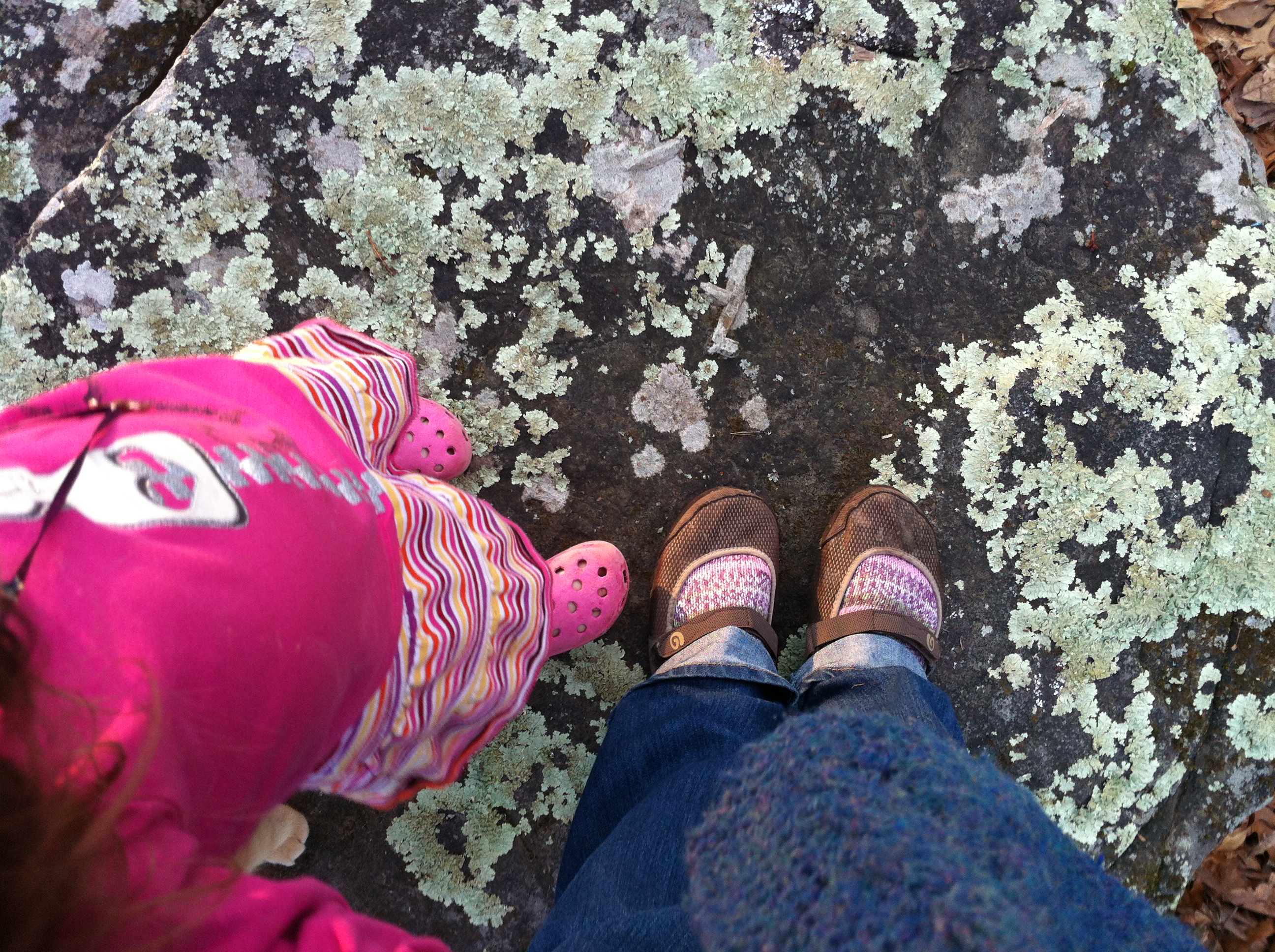
March 2013 094

stepping out on an adventure…

Categories: community, friends, nature, prayers, priestess, ritual, spirituality, womanspirit, women, women's circle, woodspriestess | Leave a comment

Sunday Sabbath: Solitude

20130324-142423.jpg

In entering this space alone
I feel I touch the spirit of this place
and it is in solitude
where I feel most authentically whole
complete
integrated
solid
stable
at ease
secure in my inner wisdom
loved by my own heart
patient with my own soul
studying my own life
and my relationship to the sacred

Being alone is not lonely
it is being alive

When I’m alone is when I feel most real, most solid, most whole, and when I like myself the best. Somehow in relationship to other people, I never quite meet my own expectations, I don’t live up to my own standards, and I don’t necessarily live in complete accordance with my own values. When I’m alone, I’m whole and complete, I love myself, and I’m at peace. Who I am is good company. I’m smart, I’m thoughtful, I’m in tune with my body and with the Spirit. I’m in relationship with the world, to the sacred, to the Goddess. Then the swirl begins again with other people, suddenly who I am is not enough. Who I am is too critical, who I am is flustered, distracted, hurried, too busy, impatient, snappy, hard, selfish, all these things. So which one is it? Which one is real? It is in solitude that I feel most solid. How can I carry that sense of self, that sense of worth, that sense of serenity, that sense of grace, that sense of ease into the rest of my life, particularly into my life with my children? I told my husband the other day, “I think I’m a better writer than I am a person.” 😦

Anyway, I mentioned on my other blog that I recently finished reading Anne Morrow Lindbergh’s Gift from the Sea and I marked a whole bunch of quotes about solitude:

“Woman must come of age by herself…
She must find her true center alone.”

Women need solitude in order to find again the true essence of themselves.

“I find there is a quality to being alone that is incredibly precious. Life rushes back into the void, richer, more vivid, fuller than before.”

“How inexplicable it seems. Anything else will be accepted as a better excuse. If one sets aside time for a business appointment, a trip to the hairdresser, a social engagement or a shopping expedition, that time is accepted as inviolable. But if one says: I cannot come because that is my hour to be alone, one is considered rude, egotistical or strange.”
Anne Morrow Lindbergh, Gift from the Sea

It snowed again today. I took a photo of my little snow-covered labyrinth as well as of the usual rocks!

20130324-142412.jpg

20130324-142440.jpg

Categories: family, introversion, nature, parenting, sabbath, spirituality, women | Leave a comment

Thursday Thealogy: Objectivity & Personal Experience

20130314-173059.jpg

Tree Sisters

“What is life? It is the flash of a firefly in the night. It is the breath of a buffalo in the winter time. It is the little shadow which runs across the grass and loses itself in the Sunset.” –Crowfoot in The Earth Speaks

“To go into the dark with a light is to know the light. To know the dark, go dark. Go without sight and find that the dark, too, blooms and sings, and is traveled by dark feet and dark wings.” –Wendell Berry in The Earth Speaks

As I mentioned last week, I wanted to call your attention to a great post at about objectivity at The Allergic Pagan. Among other interesting stuff, John writes:

Take for example the idea that the earth revolves around the sun. We laugh at the thought that anyone would think the sun was revolving around the earth. But, in point of fact, that is our most immediate experience of the world: The sun rises east, moves over our heads, sets in the west, and then rises again in the east. But we say that what is “really” happening is the earth is rotating and revolving around the sun. That explanation is the most mathematically parsimonious, because is most easily accounts for the movement of the earth, the sun, and the other celestial spheres. But is it the most “accurate” one? Accurate to what? Certainly not accurate to our everyday experience…

…Objectivity is a myth. It is a good myth and it functions well for many things. But it is a myth nonetheless….

…For once I would love to hear someone say, “Oh, that’s just objective“, instead of, “Oh, that’s just subjective.” Subjectivity is not less than objectivity. In fact, I think objectivity is a less complete account of the world that the subjective one. We gain a certain power to control our environment when we attempt to bracket our subjectivity; but we also lose something. We lose the reality of our own experience, and we lose the sense of our own participation in that reality….

The Sun Also Riseth: The limits of objectivity (UPDATED) | The Allergic Pagan.

When I applied to Ocean Seminary College, I included the following explanation as part of my letter:

In recent months I have come to the conclusion that I need to follow my intuition as to what feels right to me, rather than to try to find answers in books or articles. What feels right in my heart and in my bones. Goddess feels right to me—authentic in a way that no other spiritual framework ever has. While I do not usually interpret Goddess in a literal sense, I do still feel Her presence in my life—call it an energy, call it the sacred feminine, call it the divine, call it source, call it soul, call it spirit, call it the great mystery…I perceive forces in the world larger than myself and I choose to put a feminine form to that energy—to name it and know it as Goddess. It only seems logical to me that SHE gave birth to the world, to reality—women are the birth givers and they are made in HER image.

I come to Goddess spirituality from a childbirth education and activism background. I am deeply committed to women’s birth rights and to me it has always seemed very logical that ancient peoples would have revered that which created the earth—which gave birth to the earth—the primary life force of the planet, as female. Though it could perhaps be viewed as an unnecessary personification, it just makes plain sense to me to vision the divine as feminine. Side note about personification and tying it to John’s post about objectivity, whenever I type the word I am reminded of a story I read somewhere in which a husband asks a wife, “why must you take everything so personally?” And she responds with something like, “this is my life, how could I not take it personally? It makes sense to relate to the world in a personal way.”)

And, still thinking about the value of subjective experience and the limits of objectivity, as I wrote in an article for Restoration Earth and later republished on my own blog:

How many generations of women have pushed out their babies and fed them at the breast without knowing the exact mechanics of reproduction, let alone milk production. There are all kinds of historical myths and “rules” about breastmilk and breastfeeding and even ten years ago we used to think the inner structure of the breast was completely different from what we think it is like now. Guess what? Our breasts still made milk and we still fed our babies, whether or not we knew exactly how the milk was being produced and delivered. Body knowledge, in this case, definitely still trumped scientific knowledge. I love that feeling when I snuggle down to nurse my own baby—my body is producing milk for her regardless of my conscious knowledge of the patterns or processes. And, guess what, humans cannot improve upon it. The body continues to do what the human mind and hand cannot replicate in a lab. And, has done so for millennia. I couldn’t make this milk myself using my brain and hands and yet day in and day out I do make it for her, using the literal blood and breath of my body, approximately 32 ounces of milk every single day for the last [two years]. That is beautiful.

via Breastfeeding as a Spiritual Practice | Talk Birth.

A couple of months ago, while discussing biology, physics, botany and more with a friend, she commented to the effect of, “Once we know how it works, it isn’t amazing any more.” But, I said, isn’t it? And, do we ever really know how something “really works,” when we constantly are learning new things about the way things “really are”? Can we ever truly boil it down to “just the facts” or is there something invisible, ineffable also there? A creative, interlacing energy in which we are embedded all the time? Back to nursing babies, objectively my body is converting blood into milk to feed my offspring. A biological, hormonally programmed response to having reproduced. That’s hella cool too. But, subjectively, it’s love made flesh, it is embodied motherhood, it is biological synchronicity, it is pure magic. I don’t have to know how it works, I just have to do it. Some of the most important aspects of my life can’t be objectively determined and why should they be able to be? I take it personally.

One of the things that continues to keep me involved with Goddess spirituality is the value of direct experience. As Charlene Spretnak explains, “We would not have been interested in ‘Yahweh with a skirt,’ a distant, detached, domineering godhead who happened to be female. What was cosmologically wholesome and healing was the discovery of the Divine as immanent and around us. What was intriguing was the sacred link between the Goddess in her many guises and totemic animals and plants, sacred groves, and womb like caves, in the moon-rhythm blood of menses, the ecstatic dance–the experience of knowing Gaia, her voluptuous contours and fertile plains, her flowing waters that give life, her animal teachers…” (p. 5)

In Merlin Stone’s essay about the three faces of goddess spirituality she states, “So far, and let us hope in the future as well, feminists concerned with Goddess spirituality have seldom offered absolute or pat answers to theological questions. What has been happening is the experiencing, and at times the reporting, of these personal or group experiences: how it feels to regard the ultimate life force in our own image—as females; how it feels to openly embrace and to share our own contemplations and intuitive knowledge about the role of women on this planet; how it feels to gain a sense of direction, a motivating energy, a strength, a courage—somehow intuited as coming from a cosmic female energy force that fuels and refuels us in our struggle against all human oppression and planetary destruction.” She goes on to articulate a thealogical perspective that holds a lot of truth for me:

“Some say they find this force within themselves; others regard it as external. Some feel it in the ocean, the moon, a tree, the flight of a bird, or in the constant stream of coincidences (or noncoincidences) that occur in our lives. Some find access to it in the lighting of a candle, chanting, meditating—alone or with other women. From what I have so far read, heard, or experienced myself, I think it is safe to say that all women who feel they have experience Goddess spirituality in one way or another also feel that they have gained an inner strength and direction that temporarily or permanently has helped them to deal with life. Most women interested or involved in feminist concepts of spirituality do not regard this spirituality as an end in itself but as a means of gaining and giving strength and understanding that will help us to confront the many tangible and material issues of the blatant inequities of society as we know it today.” (p. 66-67)

This is one of the greatest strengths of spiritual feminism or Goddess traditions—women are capable of defining their own experiences. This means that the Goddess is hard to pin down. She means many different things to different people. I think that fluidity of definition is a powerful attribute that leaves the Goddess path open to many, many women. This fluidity is why it is possible for us to see Jewitches and Goddess Christians and spiritual feminists who connect to the symbol/metaphor, but not a literalist interpretation. The Goddess can hold it all.

When addressing the idea of the Goddess’ ability to elude definitional capture, it is also important to look at the notion of “believing in” the Goddess. Whether or not people “believe” in her might actually be an irrelevant question. I steer away from using the word myself and find I share the tendency of many spiritual feminists to prefer the explanation that they experience the Goddess.

This does not mean the Goddess is fictional, she can be experienced directly, but that she is not believed in in the conventional theological sense. “Most spiritual feminists explain this by saying it is only a question of semantics: everyone experiences goddess, but not everyone chooses to call her that” (p. 140). I identify with this, as I wrote above, having reached a point in my life where I consciously chose to name/label/identify those larger natural powers of the world as “Goddess.”

In Judith Laura’s book, Goddess Matters, she describes Goddess as “she who flows through all” and contrasts this with “God as manipulator.” Goddess is: “She what connects us, not only like a link in a chain but also like an electrical current.”

And, why personalize this or anthropomorphize it anyway? Because society is so very deeply rooted in the lens of patriarchal theology. This doesn’t dissolve because we say, “the Universe” or “the Mystery”—the white bearded old man in the sky remains our collective cultural image of Divinity (as something to which we can be in relation) unless we consciously and deliberately offer, reinforce, and promote other imagery.

As Christ quoted in Edelson remarks, “The real importance of the symbol of Goddess is that it breaks the power of the patriarchal symbol of God as male over the psyche” (p. 313). This is part of what I mean when I say that my interest in Goddess is first political and then later personal/religious. Both have great value to me and I do believe that whether or not someone believes in Goddess as literal or metaphorical, Her importance and value as a symbol within feminism, politics, and culture cannot be overestimated.

In the book Women’s Rituals by Barbara Walker, she makes this point: “Theology, or ‘God-knowledge,’ is a pseudoscience invented by men to define and describe the God whom they simultaneously call indefinable and indescribable. Real science studies objective phenomena. Theology studies a collective male fantasy. Much theological effort goes into hiding the fact that God is not an objective phenomenon but a construct of men’s imaginations, based on their own sense of what they are, what they wish to be, or what they think they ought to be” (p. 135). To this I would add, OR, what they wish to control and what type of social and political structures they wish to justify or wars they wish to engage in. Walker describes theaology thusly, “Thealogy, or ‘Goddess-knowledge,’ may be reinstated, after its long eclipse, as a similar collective image developed by women critical of the ethical shortcomings of patriarchal culture” (p. 135). Walker goes on to says, “Theologians established their God with a pretense of his objective existence. Thealogians need not to resort to such hypocrisy. It is possible to deal with the image of divinity as the collective self-expression that it really is, as a symbol of women’s true knowledge, and as the arbiter of moral instruction represented by humanity’s most ancient mothers” (p. 136).

So what, then, is Goddess? Walker shares the conclusions of a variety of women summarized here:

Goddess is love. Power. Nature. Femaleness. Feminine morality (rooted in care and relationship). Irresistible force. The universe. Creativity that drives me. Oldest power of the universe. Everything from born from her. The earth. The moon. Anger at patriarchal domination and oppression. Sense of what the world needs to relieve suffering. My own sentience. The trinity of Maiden, Mother, Crone. Light and dark. Body-oriented spirituality. Self-worth, liberation from inner shame (“original sin of being born female”). Each person contains her divine spark. “Cauldron-womb, the eternal matrix from which everything comes and to which everything returns…” Loving creativity. Mother. (pp 136-139)

We take her personally.

20130314-173111.jpg

In the woods this morning with my little pal again!

Categories: feminist thealogy, Goddess, spirituality, thealogy, Thursday Thealogy, womanspirit, women, women's circle | 9 Comments

Woodspriestess: Spiky

Spiky20130305-190600.jpg
flawed
imperfect
crabby
anxious
scattered
distracted

isn’t noticing this
Zen too?

overbooked
overdone
overdrawn
stretched thin
taut
tight
tense
snappy

I don’t go to the woods to write poetry. I don’t know how to do that. I don’t know anything about poems. I’ve never actually written a poem and yet, here I am with all these poem-like posts, and a proportion of this blog’s followers seem to have become so for the “poetics” in my title, rather than for the Goddess (the “Thea” in theapoetics). I go to the woods for stillness. For quiet. To listen. While I end up speaking when I’m there, it is more like I’m receiving than anything. I think of it almost as a “channeled” poetry, or spontaneous poems that come to my mind and out of my mouth without conscious direction or effort. I record what I say on my iPhone and later I transcribe the recording and a “poem” is the result. I don’t do this with anything else or anywhere else, just there in the woods. Theapoetical experiences? Or, a quietness of being and mind that allows my own inner wisdom to surface or my subconscious mind to speak? Or is it hearing myself think? Hearing myself into speech? Usually, what comes to me in these experiences isn’t crabby or stressed, even if I just felt that way a minute before, because it is in that space that I find silence and peace and in that state of bodymind, I’m not stressed or crabby any longer. However, I do persist in this misconception that to be Zen is to be calm and if I’m not calm, I’ve blown my Zen for the day. Today I was reminded that the Zen is in the noticing. That’s all.

Today, I noticed my own spikiness…

At some level, I feel like I always have to be “nice” and never get angry. Since I’m human, I fail in this self-expectation multiple times every day. I feel hypocritical to be blogging about spiritual topics and musing about peace on earth, while also being snappy at my kids and family, feeling overcommitted and stretched thin and needing to say NO to expectations and shoulds. What right do I have to call myself a priestess, when I can barely juggle my life, family, energies, and others’ expectations? In the woods today I also said:

It feels hypocritical to call myself a priestess, to come commune in the cold winds of this hillside, but that is life too. It wouldn’t be real if I didn’t sometimes yell and what matters is that I’m willing to keep trying and trying and trying. I’m willing for tomorrow to be a better day. I’m willing to take risks and start things, even though I feel like a failure, I’m willing to offer the service I have to give, even though I’m not perfect.

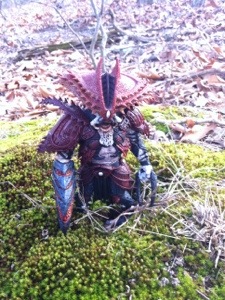
Earlier in the year when I began my daily practice, I ended up down in the woods with one of my kids’ action figures that I’d brought home from my parents’ house in my coat pocket (I went down to the woods before going back in the house so he went along). It is a Signs of the Zodiac warrior, Cancer the Crab, and his plastic body has a lot of sharp spikes on it. I decided he would be my photo for the day, because that is real life too. It isn’t all Goddess sculptures in the sunshine, sometimes there are warrior crabs around. And, sometimes I, too, feel spiky and crabby, just like this dude:

20130305-145418.jpg

When I took the pic I thought: he looks like I feel.

It takes a lot for me to keep posting when I people I know in real life are reading what I write, because there is a fear in me that they probably notice that which I also criticize in myself—“hey, what does she mean a peaceful home, I just heard her yell at her kids?!” There is a vulnerability and a courage, of sorts, in continuing to write anyway. And, it is strange really to feel more comfortable with strangers reading than people I actually know.

When I came inside today before leaving to teach, my friend and my mom were at my house and they said, “oh, were you out doing that woods thing?” and I kind of cringed to myself at that. But, in an interesting moment of synchronicity, my mom also said, “do you have wet hair?! It’s so cold out you will have frozen spikes.”

Yep, I’m spiky. And, guess what…

The woods are spiky too
Nature isn’t always nice
She has sharp teeth

The swirl of life’s energies
carries some decided unpleasantness
and very sharp edges

rocks are hard
ice is slippery
wind creates tornadoes
fire destroys

Mother Nature has an edge
a sharp, strong bite
is it really any wonder
that sometimes I bite too.

“The image of the Goddess inspires women to see ourselves as divine, our bodies as sacred, the changing phases of our lives as holy, our aggression as healthy, our anger as purifying, and our power to nurture and create, but also to limit and destroy when necessary, as the very force that sustains all life.”

-Starhawk

Categories: family, nature, poems, priestess, spirituality, theapoetics, women, woodspriestess | 1 Comment

Woodspriestess: Saving the World?

Today marks the beginning of a 30 day experiment in daily writings/photos about my sacred space in the woods. I made a New Year’s resolution of sorts to visit the same spot every day for a year and to take at least one photo and to explore through that process my relationship to the environment around me and its seasonal evolution.

First a picture…

March 2013 038
It started snowing again today and one of our cats, Big Mama, followed me down to the priestess rocks. I noticed her delicate little footprints in the snow on top of one of the rocks. Another thing I noticed and have remarked on before to my husband, is how there is a little trail of naturally occurring “stepping stones” that make a path through the woods to the rocks. When we first moved here, one of the things I wrote on my to-do list was, “make a sacred spot in the woods” and I imagined putting stepping stones down to said place. Well, come to find out, no “making” of a sacred space necessary…it was already there…AND, no need to put down my own stepping stones either. They, too, were already there. Metaphor for life? Or, just life.

March 2013 040

The path naturally appears/is uncovered as the stones there keep the light snowfall from sticking to them.

Some posts may be very brief, or photo-only, but I’m actually kicking off my experiment with some heavy thinking today…

I’ve been feeling depressed and discouraged lately after reading some really horrifying articles about incredible, unimaginable violence and brutality against women in Paupa New Guinea who are accused of being witches as well as a book about human trafficking around the world (I wrote about this in a post for Pagan Families last week). Then, I finished listening to David Hillman on Voices of the Sacred Feminine recently, in which he issues a strong call to action to the pagan community and to “witches” in the U.S. to do something about this violence, essentially stating that it is “your fault” and that instead of wasting energy on having rituals to improve one’s love life (for example), modern witches should be taking to the streets and bringing these abusers to justice. And, he asserts, the fact that they don’t, shows that they don’t really “believe”—believe in their own powers or in their own Goddess(es). This brought me back to a conversation I had with a friend before our last women’s circle gathering…does this really matter that we do this or is it a self-indulgence? We concluded that it does matter. That actively creating the kind of woman-affirming world we want to live in is a worthy, and even holy, task. I don’t have time to fully go into it all right now, but I also think the legacy of the sixteenth century “witchcraze” is powerful and the attitudes that drove it are alive and well in the world today. There is a lot of fear still bound up in that word and perhaps that is why people fail to respond to Hillman’s challenge to take to the streets.

I asked the woods today and they responded…

What can I do to save the world?

Saving the world is a Christ complex
an illusion of superiority
a delusion of grandeur.
Or is it?

Is it instead
a description
of what it is like to care?

Be awake
Be sensitive
Be present

Keep reading
Keep reading
Keep reaching
Keep laughing

Raise sons and daughters
who love themselves
and each other
and the earth

Say no to violence
in home
in thought
in act
in deed.

Say no to microaggressions
and to micro-spending decisions that support oppression
Say yes to micro-acts on the side of love
Say yes to not giving up on macro vision
and big picture thinking

Always be willing to dig deep
to think hard
to feel strongly

Rise up
stand tall
say no
be counted
hug often
hold your babies
hold your friends

Circle often
stand together
refuse to give up
when defeated, rally once more.
Persist in a vision of the way things could be
and take action
to bring that vision into reality.

Hug well
laugh often
live much

Speak your truth
tell your story
stand up for the silenced
speak for the voiceless
believe that hope still has a place

Hold steady
hold strong
hold the vision
hold each other.

When I came back inside, I added another Kiva loan to the three I already have going. I chose a women’s cooperative in Pakistan with a craft business. I paid for the loan using my profits from selling my own goddess art. I also signed up to sponsor a woman in the Congo via Woman to Woman International. Maybe this isn’t “enough,” but it is something. I work hard to support women in my own community in a variety of ways.  I write all over the place…maybe that isn’t “real” help, or maybe it is, but I can’t stop doing it.

Categories: feminism, feminist thealogy, Goddess, nature, spirituality, thealogy, women, women's circle, woodspriestess, writing | 4 Comments

Prayer

February 2013 148

New custom goddess sculptures

Stars give her strength
Sun turn her eyes
Moon guide her feet
Earth turning hold her
We pray for her
We sing for her
We drum for her
We pray.

Chrystos (in Open Mind)

Categories: blessings, poems, prayers, quotes, readings, ritual, spirituality, womanspirit, women, women's circle | Leave a comment

Never Again?

This post is modified from my final essay in a Stigmatization of the Witch class at OSC:

Recent "mamapriestess" polymer clay figure.

Recent “mamapriestess” polymer clay sculpture.

In her book, Witchcraze, Anne Barstow concludes with the following sobering statement:  “This book has been an effort to remember the names of those who died across Europe. So far, few have said, ‘Yes, these things really happened.’ And no one has yet said, ‘They will never dare to happen again.’” (p. 167).

My first response upon reading this statement was, I’ll say it! They will never dare happen again! But, then I more somberly thought about the things I currently see in society that to me still carry living threads of the witchcraze legacy and I realized that I truly think that globally as well as in the U.S. we teeter on the edge of having history repeat itself. When I read about the histrionics of the extremely conservative and fundamentalist movements in the U.S. and their increasing and frightening political influence, it is not so farfetched to me to think that women in the U.S. could potentially end up living in the American version of Iraq in this current political decade! Some of the things conservative religious movements promote and advocate are very scary. And, they are increasingly gaining political influence in subtle but powerful ways. While I don’t think we would literally experience a resurgence of the “burning times,” I think the type of misogyny that produced them remains alive and well.

As a breastfeeding counselor and breastfeeding mother, I’d marked the following quote in the preceding chapter to share: “Be not-a-woman yourself; be as invisible about your sexuality and your motherhood as you possibly can. In a century in which men wore codpieces to emphasize and flaunt their genitals, women were being told, It is dangerous to show your breasts; don’t even nurse your babies in public” (p. 150). Facebook routinely deletes images of breastfeeding mothers and suspends people’s accounts for posting them. Last year, my friend shared a picture of a placenta and her account was put on a 24-hour hold for having shared an “obscene” image. Yet, pro-rape photos are acceptable.

Throughout this course, I was amazed at the sociocultural and political legacy of the witch hunts. I see many remnants in modern culture as well as active efforts to continue to dominate and religiously/culturally sanction that domination.

So, what I will say is, they will not happen again while there are those who are willing to speak, write, read, consider and theorize about these ideas and concepts. Where there are those who are willing to name the atrocities of the past and to squarely examine their modern legacy. And, while there are those still standing for women, social justice, liberty, and humanism.

Categories: feminism, OSC, women | 1 Comment

I keep vigil…

This post is cross-posted at Pagan Families.

One of the first Pagan bloggers I ever followed online is Teo Bishop, a solitary Druid and prolific writer. Recently, Bishop wrote about creating community poetry for use in liturgy based on the starting line, “I keep vigil to the fire in my heart” (see current contributions from other writers via this post: We Keep Vigil: Crowdsourced Poetry). Bishop started this experiment last year during Imbolc, when he composed a spontaneous poem to Brigid. As someone who frequently experiences spontaneous poetry in the sacred spot in the woods behind my house, an experience I refer to as theapoetics, I was instantly captivated by this whole keeping vigil thing. Imbolc has a natural connection to the cycle of pregnancy, birth, and breastfeeding and the fire in my own heart burns brightly for these pivotal life experiences. So, I went down to the woods, opened my mouth and this is what emerged…

I keep vigil
to the fire
in my heart.

I keep vigil
to the women
of the world

women’s voices
women’s stories
women’s lives

I keep vigil for the birthing women of the planet
whether she gives birth
at 5 weeks, 12 weeks,
15 weeks, 20 weeks
or 42 weeks

I keep vigil for the mothers
who cry over tiny bodies
of their babies
I keep vigil to
the bright hot spirit
of the newborn babies
that greet the world
with eyes wide open

I keep vigil for the woman
who cries in the night
I keep vigil for the woman
who births with joy and exultation
I keep vigil for the woman
who struggles and suffers in birth

I keep vigil to the midwives
and the women who serve each other
midwife means loves women

I keep vigil to
the breastfeeding women
of the world
and I keep vigil to the mother
whose heart was broken
in trying to nurse her baby

I keep vigil for the mothers who laugh
and the mothers who cry
the mothers who sing
and the mothers who moan
the mothers who need
and the mother give
the mothers who triumph
and the mothers who “fail”

I keep vigil for the mothers
who try again

I keep vigil for the mothers
who want more children
and who cannot have them
and I keep vigil for the mothers
who have more children
than they truly want

I keep vigil for the women
who pull their sweet, warm, slippery babies
up to grateful hearts and breasts following birth
and I keep vigil for the women
who let tiny bodies slip through their own
never to take a breath of life

I keep vigil for the women
snuggling nose to nose with their children
hugging
laughing
braiding hair
playing
reading
dancing
cooking
and I keep vigil
to the mothers driving,
transporting,
shuttling,
attending lessons,
taking movies and pictures
losing sleep at night

I keep vigil
for the mothers of the world
I keep vigil
for the women of the world

I keep vigil
to the fire
in my heart.

1/28/2013

What comes to your mind when you think about keeping vigil? This Imbolc, what fire in your heart are you tending? What burns brightly in your spirit? To what are you keeping vigil?

Categories: liturgy, nature, poems, prayers, spirituality, theapoetics, womanspirit, women, writing | Leave a comment

Body Blessing to and from the Mother

20130116-165127.jpg

Feet planted solidly on Mother Earth
Drawing up
Solid
Gaia energy
Rich life
Pulsing planet
Power of being

Shoulders back
Chest open
I breathe in the Breath of Life
Wind
Air
Oxygen
Swirling
Flowing
Breathing me

Spreading my arms
Hands open
I feel the pulse of my heart
Blood flowing
Life giving
Throughout my body
The blood of my womb
Matching the tides of the ocean
And the pull of the moon
Linked in watery wonder

Breathing deep
and clearing my mind
I feel the spark of life within
Fiery
Molten
Passion blooming
Vibrantly alive
And dancing
Twisting through my spirit
With energetic ecstasy

Breathe in
Breathe out
Draw it up
Draw it in

Resting now,
In the hand of Mother Goddess
Breathing with her
Standing with her
Resting with her
Knowing her
Deeply

Blessed be.

I composed the above as my first post as a regular contributor to the Pagan Families blog on Patheos!

Alternate:

This month I was also planning our winter women’s retreat and I decided to modify the blessing somewhat to use as our opening invocation. This was the first time I’d used something that I written entirely on my own and it felt vulnerable—I had to ask, “how was that? Was that okay? Did that work?” 😉

The purpose of the invocation is to ground us in our bodies, while also connecting us to the larger swirl of energies that surround us—as I composed it, I envisioned sort of a circle, in which we are embedded and moving within. I feel as if this invocation itself creates a circle and brings the immanent and transcendent together into shared space, as it both invokes the elements and awakens your body.

In this version, the words included in parentheses are optional replacements or additions, according to your specific group’s needs.

January 2013 051

Little herbal goddess doll we made during the retreat also.

Feet planted solidly on Mother Earth
Drawing up
Solid
Gaia energy
Rich life
Pulsing planet
Power of being

Shoulders back
Chest open
Breathe in the Breath of Life
Wind
Air
Oxygen
Swirling
Flowing
Breathing you

Spreading your arms
Hands open
Feel the pulse of your heart
Blood flowing
Life giving
Throughout your body
The blood of your womb (veins)
Matching the tides of the ocean
And the pull of the moon
Linked in watery wonder

Breathing deep
and clearing your mind
Feel the spark of life within
Fiery
Molten
Passion blooming
Vibrantly alive
And dancing
Twisting through your spirit
With energetic ecstasy

Breathe in
Breathe out
Draw it up
Draw it in

Resting now,
on the Earth
And in this circle (of women)
(In the hand of the Goddess)

Breathing with her
Standing with her
Knowing her
Deeply

Blessed be.

Categories: blessings, friends, invocations, poems, prayers, priestess, readings, ritual, spirituality, theapoetics, womanspirit, women, women's circle, writing | 1 Comment

Women’s Voices

December 2012 115The voices of women are rising again
we are mothers, daughters,
lovers, leaders, teachers
authors, priestesses, even warriors
and we will not be silenced.
we will speak for the vulnerable
we will speak for the oppressed
and we will speak for ourselves.
The world will be saved,
not by a dying man,
but by women’s stories…

(1/10/13)

‎I listened to David Hillman speak on a recent episode of Voices of the Sacred Feminine and he mentioned that when political and religious tides were turning in the ancient world, those who wanted to dominate and control didn’t go for the leaders of countries, for political heads of states, or for those in powerful jobs, they went for the priestesses. They went for women who held the cultural stories and ritual language of the people. They went for the healers and nurturers and those who took care of others. They destroyed temples and sacred images and books. They almost succeeded in total eradication of the role of priestess from the world and worked really hard to take midwives and wisewomen out completely as well.

I addressed a similar topic in my Stigmatization of the Witch class at OSC with regard to the question of why sexuality and the woman as healer became such a threat to European Medieval society:

Allan-statue(sacredsource)
Many women accused as “witches” were past their childbearing years—thus, had used up their usefulness as a sexual commodity and because many of them were widowed/not controlled by a man, they threatened the very fabric of the patriarchal community. Women in general were associated with the “evils” of sexuality, sex in itself being viewed as sinful rather than sacred. Many of the women accused were midwives and healers. Birth was purposefully denigrated and made “unclean” as a means of subjugating women and dominant religious traditions sought “purification” and “rebirth” in patriarchal traditions—transcending the body and the “unclean” birth from a lowly female body, to a spiritual birth from a father figure. No mother/woman required! Midwives/witches’ association with the “dirty” and original-sinful act of birth, made them natural suspects for other mysterious and powerful events (such as infant death or personal disfigurement). It would seem much more logical that the power to give life, to express the might of creation, should really have been viewed as one of the holiest and most profoundly meaningful acts in society—it seems much more logical and natural to celebrate women as life-givers and sustainers of society, but this was actually purposefully inverted and fear rather than celebration came to surround the mysteries and potent powers of a woman’s reproductive life.  In some ways, perhaps “womb envy” was one of the driving forces behind the witch hunt phenomenon…

Likewise with the healing abilities of the accused—the ability to heal was a special power that gave women authority and influence over the community members. I was interested by the Barstow’s remarks that the women accused were, “…uppity women—women given to speaking out, to a bold tongue and independent spirit….spirit, quarrelsomeness, a refusal to be put down. They talked back to their neighbors, their ministers, even to their judges and executioners.” (p. 27) What if other women, who saw these women as important figures, felt like they could also be independent and speak their minds? Society would fall apart!

I am reminded of a poem I received once in a card from the National Association of Mother’s Centers:

One Woman Awake
Awakens another,
The second awakens her next door neighbor.
And three awake can rouse the town,
And turn the whole place upside down.
And many awake
Can raise such a fuss
That it finally awakens the rest of us.
One woman up,
With dawn in her eyes,
Multiplies.

It is not uncommon for a society not to want to risk the threat of awakened women turning the whole place upside down.

“We’re volcanoes. When we women offer our experience as our truth, as human truth, all the maps change. New mountains form.”

– Ursula Le Guin

‎”I hear the singing of the lives of women. The clear mystery, the offering, and the pride.”

– Muriel Rukeyser

Categories: feminist thealogy, OSC, priestess, quotes, women | 4 Comments

Desert Priestess Book

desertpriestess

Desert Priestess: a memoir (Amazon affiliate link included)

I absolutely loved this book! Written by Anne Key, Desert Priestess: a memoir, is a memoir of her three years as the priestess at the Sekhmet Goddess Temple in Nevada. The memoir is beautifully written in a very honest manner with the narrative including her self-doubts and follies as well as her priestessly moments. After I finished it, I felt like my heart was yearning to take a pilgrimage to the desert, as well as to further deepen and refine my own priestess path! I highlighted several sections of the Kindle version of the text to share:

Writing about her role as a priestess, Anne explains:

…And I can only say that, as priestess, I worked so very hard to open my heart to each person who came, to meet each in perfect love and perfect trust of the structure and beauty of our desert wreath. To do this, I realized that I had to be not only sure of my purpose and strong in my stance but that I also had to see each person as an integral and necessary part of our circle. To do that, I had to be clear about myself and my intentions and I had to stay connected to the Divine…

I realized early in my tenure as priestess that I must stay connected to the Divine to allow things to come through me instead of from me. Everything depended on that: my ability to lead ritual, my ability to stay centered, my ability to understand those who came to the temple, my ability to see my way out of difficult issues. Striving to stay connected to the Divine made another point painfully apparent: I had to be clear, to the depths of my soul. I had to understand what I was, where my limits were, and accept totally who I was. I had to be able to be fully and totally present at each moment of ritual, wide open to everything, and firmly, firmly rooted. This was a real challenge…

Key, Anne (2011-03-29). Desert Priestess: a memoir (p. 45). Goddess Ink. Kindle Edition.

Another very good section of Desert Priestess was Key’s exploration of why it matters to call the Divine “Goddess”:

I lecture at various academic venues on Goddess Spirituality, and I continue to be amazed at the answer to my question: “Does your god have a gender?” While the wording would seem to make the question rhetorical, people almost always answer: “No, my god does not have a gender.” Given the statistic that over 75 percent of people living in the United States claim Christianity as their faith, when I lecture I assume that most of my audience is Christian. When I ask them to describe their god, to tell me what that god looks like in art, many times someone will mention a long white beard, which firmly answers the gender inquiry. But even if they don’t go as far as to mention a beard, when I ask them if their god is a woman, they are shocked and absolutely, defiantly sure that their genderless god is not a woman. We women who create life, the highest of all divine acts, cannot be considered a god.

Between my experiences at the temple and in academia, it has become clear to me that most women in twenty-first-century American culture never see themselves as divine. And it is no wonder. The most predominant images of women in the modern media are as accoutrements to products such as cars or purses. This to me is one of the greatest gifts of the goddess temples, because images of the Female Divine are important. They are important because they begin the process of consecrating women’s bodies as divine. When we as women begin to see our bodies as a reflection of the Divine, then our bodies are removed from the sole category of “object of the male gaze” to corporealized divinity, the embodiment of the Divine.

When women come into the temple, they see themselves, and they see themselves venerated. They see themselves in various shapes and colors, from the round and almond-eyed Madre del Mundo to the black and slim Sekhmet to the brown and regal Virgen de Guadalupe. We women have lived our lives trying to see ourselves in the image of the Christian God, living with the cognitive dissonance of the sound of Charlton Heston’s voice as God, in Michelangelo’s beefy finger, and in the picture tacked on the wall in Sunday school of a man’s aged and ageless face whose white beard melts into the clouds. We live in this culture of the image of God as white and male. As if this were not enough to get the point across, most of those who represent God in the Christian religion—the priests, preachers, and pastors—are men. And if women do represent the Christian God, there is almost always a controversy involved. Still, we women have persevered to find ourselves in the Divine and to see ourselves as divine, and even more courageously to represent the Divine. A sigh of relief automatically escapes me and the cognitive dissonance melts away when I am in the presence of an image of the Divine that is female. Images of the Female Divine are important because they embody the divine qualities of the feminine. The roles of mother, healer, guide, protector, lover, provider, and nurturer combine with the qualities of compassion, justice, truth, fertility, strength, and love to present women in multiple dimensions…

Key, Anne (2011-03-29). Desert Priestess: a memoir (pp. 50-52). Goddess Ink. Kindle Edition.

Sculptures hanging out in the sunshine!

Sculptures hanging out in the sunshine!

She goes on to make this important point: “It is of course no small wonder why graven images are so tightly controlled by religious traditions.” (p. 52) Sometimes I feel like this is what I’m tapping into when I make my own goddess sculptures—a resistance to tight control over graven images and over personalization of divinity as female in essence!

Later, Anne writes about creating a sisterhood of priestesses and she describes their vow to each other in a lovely way:

As sisters, we are one another’s truth tellers. We are one another’s loving and honest mirrors. We advise, even when we are not queried. And we let go so that each may fly on her own wings. Our sisters are our bonds with the deepest mysteries. As sisters, we are the ones who bleed, we are the ones who birth, we are the ones who nourish, we are the ones who weave the web, and we are the ones who cut the cord. As women, as sisters, as priestesses, we stand at the doorways of life and death, bonded by the cycles of our bodies and our lives.

Key, Anne (2011-03-29). Desert Priestess: a memoir (p. 57). Goddess Ink. Kindle Edition.

She also writes about creating ritual and liturgy in a desert climate:

At the beginning of each ceremony, we honored the four directions and an element associated with each: east and air; south and fire; west and water; north and earth. Many times when the directions are called, they are written with a wet, lush environment in mind: cool breeze, deep black earth, rushing rivers, dense forests. But these images did not reflect the desert land, a dry, thriving environment.

I wrote a call of directions specifically for this land, for this place, for this temple:

Winds of the mind, open free.

Breath of life, breathe in me.

Red flame of truth, burning pure.

Spark of life, ignite me.

Water of my soul, blood of earth.

Spring of life, wash me.

Bones of rock, sand, and earth.

Roots of life, ground me.

Key, Anne (2011-03-29). Desert Priestess: a memoir (pp. 90-91). Goddess Ink. Kindle Edition.

And, finally, another section I marked was in her description of feeding sweet little birds outside her window, only to see them snapped out of the air and eaten by a hawk. She says,  “Of course, I would have preferred that the hawks eat the mice. Much as I loved the cute little mice, the mess they left in our kitchen cupboards was disgusting and infuriating. But the birds! The little birds had done nothing but entertain us.” (Amen!) But, then she goes to make the best point ever about nature: “Obviously, this cycle was not about me, or what I thought was cute” (p. 116).

I really recommend this book! It is of particular interest to priestesses and to those interested in Goddess Temples and women’s spirituality in general, but I also think it would be interesting to people who like memoirs and stories about women’s lives and simple, yet profound, adventures.

Categories: books, nature, priestess, quotes, resources, reviews, spirituality, womanspirit, women | 2 Comments

How the UU Church Introduced Me to the Goddess

Two blogs that I enjoy reading—Bishop in the Grove and Love, Joy, Feminism—both recently wrote about their personal experiences attending Unitarian Universalist Churches and the sense of community/value they found there. It made me think about the role of the UU Church in my own life and I decided it was time to give a shout-out to the UU Church and how it introduced me to the Goddess and to religion in a form that I not only could find palatable, but also deliciously meaningful and enriching. My first cause in life was feminism—a sense honed by my experiences as an agnostic homeschooled teenager amidst mostly fundamentalist Christians. I could not help but stand up for women’s rights and challenge the rhetoric my peers often shared about a “woman’s [lesser] place” in life and society. Because my developing sense of feminism burgeoned in response to patriarchal religious beliefs about women—the only religious beliefs I had yet encountered—I also developed a sense that feminism was not compatible with religion, period.

In college in the 1990’s as a psychology major, I always chose “women’s issues” as my main area of focus and I went on to graduate school in clinical social work, doing my internship at a battered women’s shelter (I also volunteered in one during my undergraduate years). My sense of the Goddess that later emerged is very intertwined with my deep beliefs about the inherent value and worth of women. After finishing graduate school in 2000, I started to have lots of “searching/seeking” conversations in the car with my husband–trying to find something to “plug into” and saying, “maybe I need to get religious?” But, there was no religion I could find that fit me/matched me and I decided it probably didn’t exist. As time passed, I continued to seek/discuss/ponder and a different friend mentioned her UU church and it being a “perfect spiritual home for her”–I dismissed it because of the word “church,” but in 2005, I took the infamous Beliefnet quiz and got a 100% match for Unitarian Universalism. Lo and behold–my beliefs about social justice and about the inherent dignity and worth of each human being, as well as about the deep mystery and wonder of the natural world were “pluggable” after all! By this time, we had moved and so I started attending my very, very tiny local UU fellowship.

Cakes “Gaia” logo

In 2003, my good friend had taken a women’s studies class in college and lent me the books When God was a Woman and The Chalice and the Blade and we began to have discussions about the Goddess and to explore our feelings about religion and meaning. She was the first person I was ever able to speak to deeply about spirituality. I was raised as a fourth generation “non-religious” person—my parents, grandparents, and great-grandparents all had/have no religious or church affiliation. My friend and I talked a lot about Wicca and paganism and as I read more books, I realized something was missing for me in most pagan literature. I eventually discovered the “missing” element, for me, was the Goddess emphasis of feminist spirituality.

After beginning to attend the small local UU church that I jokingly refer to as the Church of Democracy and Evolution, I discovered the fabulous Women and Religion subgroup within the larger UU world and started to realize that my strong draw towards Goddess actually had a place and a home under the UU “umbrella” and that I didn’t have to self-identify as pagan or Wiccan in order to explore a relationship with Goddess. I trained as a Cakes for the Queen of Heaven facilitator in 2008 and discovered something every powerful in these resources. At the conclusion of the training, I had profound sense of THIS is what else there is for me! It was a pivotal moment.

After the empowering and transformative births of my sons in 2003 and 2006, I became deeply enmeshed in birthwork—expanding my senses of women’s issues and social justice into birth activism and birth education. Then, in 2009, my third son died during my second trimester of pregnancy. My birth-miscarriage experience with him was a powerful and transforming experience as well and I was left with a sense of openness to change. A receptivity to larger forces and powers in the world.  Indeed, it felt like a spiritual experience of sorts. After his birth and in my journey through grief, I experienced a sense of myself as inherently worthy and valuable—that I didn’t need to do anything special to be a worthwhile human being. I also had the revelation shortly after his birth that the power of women that is so present in birth, is present in women, period. I realized that this sense of “birth power” could be found in women’s spirituality and I found myself irresistibly drawn to more and more reading and study of feminist spirituality and Goddess thealogy. However, reading wasn’t enough. I felt the thread of Goddess that had danced at the edges of my life for so long, had finally become a distinct and extremely important presence in my life and I felt a call to more formally dedicate myself to a Goddess path.

On my son’s due date on May 3, 2010, which was also my 31st birthday, I did a small, private ceremony in the little stone labyrinth in my front yard in which I formally declared to myself and to the nature around me that I was now committed to practicing the presence of the Goddess in my everyday life. In May of 2011 and May of 2012, I renewed that commitment in another private ritual. Also in May of 2010, I went to a healer for “somatic re-patterning” (or, as I call it, “reprogramming my brain!”) and let go of the remaining neural pathways doubting my own worth and value. During our session, she told me that my healing gift is in words (not in physical touch or treatment) and that I live my spirituality, I don’t have to explain it. She also told me that something big was shifting inside of me and that I was opening up it a new direction. She asked if I perceived that shift in my life and I said, YES, knowing that it was this new sense of connection to the feminine divine.

In November of 2010, I attended at women’s spirituality retreat at a UU church in St. Louis and we did an exercise in which we each wrote a “gift” on a piece of paper (following a guided meditation) and then put them into a communal bowl and each drew out another’s woman’s gift–she was sharing it with us. I drew out “sacred words.” My friend told me she thought it was perfect for me because talking to me about her own experience of spirituality had been deeply meaningful to her. When I got home, I started looking for study programs/schools online because I knew in my heart that the time had come to deepen my personal study/experiences. After this retreat, I also started planning and facilitating quarterly women’s spirituality retreats locally. And, in January 2011, I gave birth to my own baby girl. She was born at home into my own hands, alone, under my own power and with my heart full of hope and joy and the promise of new beginnings.

In March of 2011 I started working on my D. Min degree in Thealogy/Goddess Studies at Ocean Seminary College and in July of 2012 I became ordained as a priestess with Global Goddess. Without my tentative steps into the UU church, I do not know that I’d be where I am right now. As is kind of the tagline of the program, I can honestly say that, “Cakes changed my life!”  😉

Categories: feminism, feminist thealogy, Goddess, spirituality, UU, women | 3 Comments

Stand, Sisters…

Stand together, dear sisters,

arm in arm, thigh to thigh, heart to heart–

Great CD for women’s circles! Circle of Women
(Amazon affiliate link)

stand strong, sturdy, flexible.

Stand on the seesaw

and know–

it’s always moving, never still,

forever moving up and down

always rises up again.

Stand flexibly, dear sisters.

stand together, arm in arm,

and whether you’re up or down–

Rejoice!

–Barbara Ardinger in SageWoman Magazine #78

Categories: friends, poems, readings, womanspirit, women, women's circle | Leave a comment

Blessingways and the role of ritual

I saw this gorgeous blessingway image pinned on Pinterest a while ago. Love it!

In this circle No Fear
In this circle Deep Peace
In this circle Great Happiness
In this circle Rich Connection

I’ve recently been on a reading streak with books on ritual. I’ve always been interested in ritual, especially women’s rituals, and I’ve planned and facilitated a lot of different rituals. I also have a huge variety of books that include information on planning rituals, women’s spirituality books, books about blessingways, and more. I’m branching out even more with my recent kick though, starting with buying books on officiating/planning wedding ceremonies (I have two weddings coming up in October). Then, I was talking to some mothers of newly teenage boys about planning some kind of coming of age rite/ritual for them and  bought some more books on creating sacred ceremonies for teenagers. (I’m good with books for women/girls, but sadly lacking in resources for ceremonies and celebrations for boys/men.) One of the books I purchased was Rituals for Our Times, a book about “celebrating, healing, and changing our lives and relationships.” I left a mini-review on goodreads already:

There were some good things about this book about the meaning, value, purpose, and role of ritual in family life. I lost interest about halfway through and ended up skimming the second half. While it does contain some planning lists/worksheets for considering your own family rituals, the overall emphasis is on short vignettes of how other families have coped with challenges or occasions in their own lives. Also, the focus is on very conventional, mainstream “ritual” occasions–birthdays, anniversaries, holidays–rather than on life cycle rites of passage and other more spiritual transitions in one’s life.

However, one section I marked was about the elements that make ritual work for us and I thought about blessingways and how they neatly fulfill all of the necessary ritual elements (which I would note are not about symbols, actions, and physical objects, but are instead about the emotional elements of connection, affection, and relationship):

Relating–”the shaping, expressing, and maintaining of important relationships…established relationships were reaffirmed and new relationship possibilities opened.” Many women choose to invite those from their inner circle to their blessingways. This means of deeply engaging with and connecting with those closest to you, reaffirms and strengthens important relationships. In my own life, I’ve always chosen to invite more women than just those in my “inner circle” (thinking of it as the next circle out from inner circle) and in so doing have found that it is true that new relationship possibilities emerge from the reaching out and inclusion of those who were originally less close, but who after the connection of shared ritual, then became closer friends.

Changing–”the making and marking of transitions for self and others.” Birth and the entry into motherhood—an intense and permanent life change–is one of life’s most significant transitions. A blessingway marks the significance of this huge change.

Healing–”recovery from loss,” special tributes, recovering from fears or scars from previous births or cultural socialization about birth. My mom and some close friends had a meaningful ceremony for me following the miscarriage-birth of my third baby. I’ve also planned several blessingways in which releasing fears was a potent element of the ritual.

Believing–”the voicing of beliefs and the making of meaning.” By honoring a pregnant woman through ceremony, we are affirming that pregnancy, birth, and motherhood are valuable and meaningful rites of passage deserving of celebration and acknowledgement.

Celebrating–”the expressing of deep joy and the honoring of life with festivity.” Celebrating accomplishments of…one’s very being.

Notice that what is NOT included is any mention of a specific religion, deity, or “should do” list of what color of candle to include! I’ve observed that many people are starved for ritual, but they may so too be deeply scarred from rituals of their pasts. I come from a family history of “non-religious” people and I feel like I seem to have less baggage about ritual and ceremony than other people do. An example from the recent planning for a mother blessing ceremony: we were talking about one of the blessingway songs that we customarily sing–Call Down Blessing–we weren’t sure if we should include it for fear that it would seem too “spiritual” or metaphysical for the honoree (i.e. blessings from where?!) and I remembered another friend asking during a body blessing ritual we did at a women’s retreat, “but WHO’s doing the blessing?” As someone who does not come a religious framework in which blessings are traditionally bestowed from outside sources–i.e. a priest/priestess or an Abrahamic God–the answer felt simple, well, WE are. We’re blessing each other. When we “call down a blessing” we’re invoking the connection of the women around us, the women of all past times and places, and of the beautiful world that surrounds us. We might each personally add something more to that calling down, but at the root, to me, it is an affirmation of connection to the rhythms and cycles of relationship, time, and place. Blessings come from within and around us all the time, there’s nothing supernatural about it.

I also think, though I could be wrong, that it is possible to plan and facilitate women’s rituals that speak to the “womanspirit” in all of us and do not require a specifically shared spiritual framework or belief system in order to gain something special from the connection with other women.

In another book I finished recently, The Power of Ritual, the author explains:

“Ritual opens a doorway in the invisible wall that seems to separate the spiritual and the physical. The formal quality of ritual allows us to move into the space between the worlds, experience what we need, and then step back and once more close the doorway so we can return to our lives enriched.”

She goes on to say:

You do not actually have to accept the ideas of any single tradition, or even believe in divine forces at all, to take part in ritual. Ritual is a direct experience, not a doctrine. Though it will certainly help to suspend your disbelief for the time of the ritual, you could attend a group ritual, take part in the chanting and drumming, and find yourself transported to a sense of wonder at the simple beauty of it all without ever actually believing in any of the claims made or the Spirits invoked. You can also adapt rituals to your own beliefs. If evolution means more to you than a Creator, you could see ritual as a way to connect yourself to the life force…

As I continued to think about these ideas, I finished reading another book on ritual called The Goddess Celebrates. An anthology of women’s rituals, this book included two essays by wisewoman birthkeeper, Jeannine Pavarti Baker. She says:

The entire Blessingway Ceremony is a template for childbirth. The beginning rituals are like nesting and early labor. The grooming and washing like active labor. The gift giving like giving birth and the closing songs/prayers, delivery of the placenta and postpartum. A shamanic midwife learns how to read a Blessingway diagnostically and mythically, sharing what she saw with the pregnant woman in order to clear the road better for birth.

[emphasis mine, because isn’t that just a cool idea?! I feel another blog post coming on in which I “read” my own blessingway experiences and how they cleared the way for my births]

Baker goes on to describe the potent meaning of birth and its affirmation through and by ritual acknowledgement:

Birth is a woman’s spiritual vision quest. When this idea is ritualized beforehand, the deeper meanings of childbirth can more readily be accessed. Birth is also beyond any one woman’s personal desires and will, binding her in the community of all women. Like the birthing beads, her experiences is one more bead on a very long strand connecting all mothers. Rituals for birth hone these birthing beads, bringing to light each facet of the journey of birth…

20120818-120826.jpg

I wish for you a life full of ritual and community.” —Flaming Rainbow Woman, Spiritual Warrior 

(in The Thundering Years: Rituals and Sacred Wisdom for Teens)

Genuine, heartfelt ritual helps us reconnect with power and vision as well as with the sadness and pain of the human condition. When the power and vision come together, there’s some sense of doing things properly for their own sake.” —Pema Chodron

(in The Thundering Years: Rituals and Sacred Wisdom for Teens)

Other posts about mother blessings can be found here.


Amazon affiliate links included in book titles.

This post was originally published on Talk Birth

Categories: blessings, resources, ritual, womanspirit, women, women's circle | 4 Comments

The Central Value of Relationship

This post was originally published in The Oracle, the publication of Global Goddess and is based on a lesson I completed during one of my classes at Ocean Seminary College.

According to one of my favorite Goddess scholars, Carol Christ, the central ethical vision of Goddess religion is that all beings are embedded in a web of interconnected relatedness. All beings are part of the web of life. Everything is in relation—indeed it is possible to have relationships with the sun, sky, wind, and rainbow, as well as to other people, animals, plants, and the Divine. Everything is interconnected and does not exist without connection/relationship. Connection is strength, not weakness, and it is central.

As Christ explains, “The rituals and symbols of Goddess religion…[bring] experience and deep feeling to consciousness so that they can shape our lives; helping us broaden and deepen our understanding of our interdependence to include all beings and all people; binding us to others and shaping communities in which concern for the earth and all people can be embodied.” This connection is celebrated ritually through:

  • Invoking the four directions in ritual
  • Earth-honoring practices
  • Invoking the four elements in ritual and including symbolic representations of them
  • Visioning the Earth as the body of the divine
  • Venerating the Divine Female, which celebrates rather than denigrates women, the body, the earth, and the natural cycles of life
  • Wheel of the year orientation/celebration

These things are the mythos of Goddess religion and the ethos that results is:

  • Women who have pride in being female and pride in and love for their bodies.
  • Men who respect women as inherently valuable
  • A planet that is treated responsibly and with care
  • People who act as if they are a part of rather than apart from it—damaging the earth becomes no longer acceptable
  • Nurturing life and caregiving are acts that are valued
  • Motherhood and children and parenting are treated as worthwhile and meaningful activities and this is reflected in cultural, social, and political practices (such as in paid maternity leave of adequate duration)

Goddess ethics are “discovered within the web of life” rather than imposed from without. This has been true for me as a non-religious person for much of my life, who later discovered Unitarian Universalism and through that Goddess spirituality. I’ve never seen the need to have religion define for me what is a good, moral action and what is not (my experience is that many people with Christian backgrounds can’t understand how this is possible). What feels right and good and moral and ethical can be learned through living and in the context of family and relationship, it is does not have to be doctrine. Some people would argue that you cannot trust your “feelings” as to moral action, but I find more evidence to support the idea that ignoring your feelings and doing what you’re told instead has historically created a good deal of harm.

Also according to Christ there is “no self that is not created in relationship with another.” I used to struggle somewhat with this notion—my inherent understanding of the world was of the central value of human relationship, but if this is true, then without my relationships who am I? Relatedness as central originally seemed to me to make humans your “god.” I spent what feels like years trying to figure out who I was independent of other people and it is basically impossible to do so, BUT, this also gives other people too much credit or responsibility for my identity. I was consumed with needing to find my core self, my true self, and I chafed at the notion of “no self” or “selflessness” from Buddhist traditions. I have since learned that defining myself in the context of relationships to other people is too narrow a lens, I left out many other pieces of the web of connection. I exist in relation to the world, not just other people, and that includes Goddess power/energy. I name the holding web as Goddess.

It is profoundly disordered to think you can exist independently of others, but I also believe that you can be in relation to yourself, in a sense, in a healthy and strong way.

Interestingly, it was through my discovery of women’ spirituality and Goddess that I finally was able to regain a sense of myself as inherently worthy and valuable and NOT have this worth tied to doing for others, because I found that I could be related/relational TO the web or larger whole rather than just other people, whose affection towards or need of me may be transient. I used to feel so buffeted by the whims of others, rather than having a solid sense of being held in the hand of the Goddess (embedded in the web of relatedness). My sense of related embeddedness allows me to still be intimately engaged with and related to, while still not dependent on others for self-concept/identity/definition. My sense of self can come from within a relationship to my perceived place in a larger whole or web of existence. I feel I have reached a point where I can value all relatedness/relationships, rather than identity seeking through relationship or role exclusively with other people.

My favorite quote about the concept of existing in the context of relationship comes from another of Christ’s books, She Who Changes:

“Martin Buber, there can be no ‘I’ without a ‘thou,’ no self apart from relationship. Martin Buber said that before speech is developed, the hand of the infant reaches out for its mother (or other nurturer).’ In other words, before Descartes could formulate a thought, and certainly before he knew that he thought, he reached out his hand in relationship. The existence of the other is as certain as the existence of the self. Long before infants learn to speak, they come into relationship with others besides the mother, and with the physical world, with cribs, toys, sunbeams, shadows of leaves blowing in the wind. The existence of a world and the existence of others can be doubted only by someone who imagines that he or she could exist apart from relationships. According to process philosophy, a person who imagines he has no relationships is to be pitied-or committed to a mental institution. His thoughts on this matter certainly should not have become the foundation of modern western thought.” (Christ, 74)

I have learned a lot about the fundamental truth of relatedness through my own experiences as a mother and the quote above brings chills to my body. Relationship is our first and deepest urge. The infant’s first instinct is to connect with others. Before an infant can verbalize or mobilize, she reaches out a hand to her mother. I have most definitely seen this with my own babies. Mothering is a profoundly physical experience. The mother’s body is the baby’s “habitat” in pregnancy and for many months following birth. Through the mother’s body is how the baby learns to interpret and to relate to the rest of the world and it is to mother’s body that she returns for safety, nurturance, and peace. Birth and breastfeeding exist on a continuum as well, with mother’s chest becoming baby’s new “home” after having lived in her womb for nine months. These thoroughly embodied experiences of the act of giving life and in creating someone else’s life and relationship to the world are profoundly meaningful. With my last baby, I actively introduced her to the world—taking her out one morning and touching her feet to the earth and introducing her to the planet.

With my baby, I also see so clearly how she sees herself reflected in my eyes—loved and worthy and wonderful and true and beautiful. She looks to me, in my eyes, to gauge safety and danger as well as worth and respect. She sees me seeing her and what I see is SO GOOD. (And, I also see her seeing me and I’m pretty great myself!)

Molly is a certified birth educator, writer, and activist who lives with her husband and children in central Missouri. She is a breastfeeding counselor, a professor of human services, and doctoral student in women’s spirituality at Ocean Seminary College. She was recently ordained as a Priestess with Global Goddess. Molly blogs about birth, motherhood, and women’s issues at http://talkbirth.me and about thealogy and the Goddess at http://goddesspriestess.com

References: Carol P. Christ. She Who Changes: Re-imagining the Divine in the World. Kindle Edition.

20120912-161657.jpg

Categories: feminist thealogy, Goddess, spirituality, thealogy, women, writing | 3 Comments

Create a free website or blog at WordPress.com.